Rogest 50
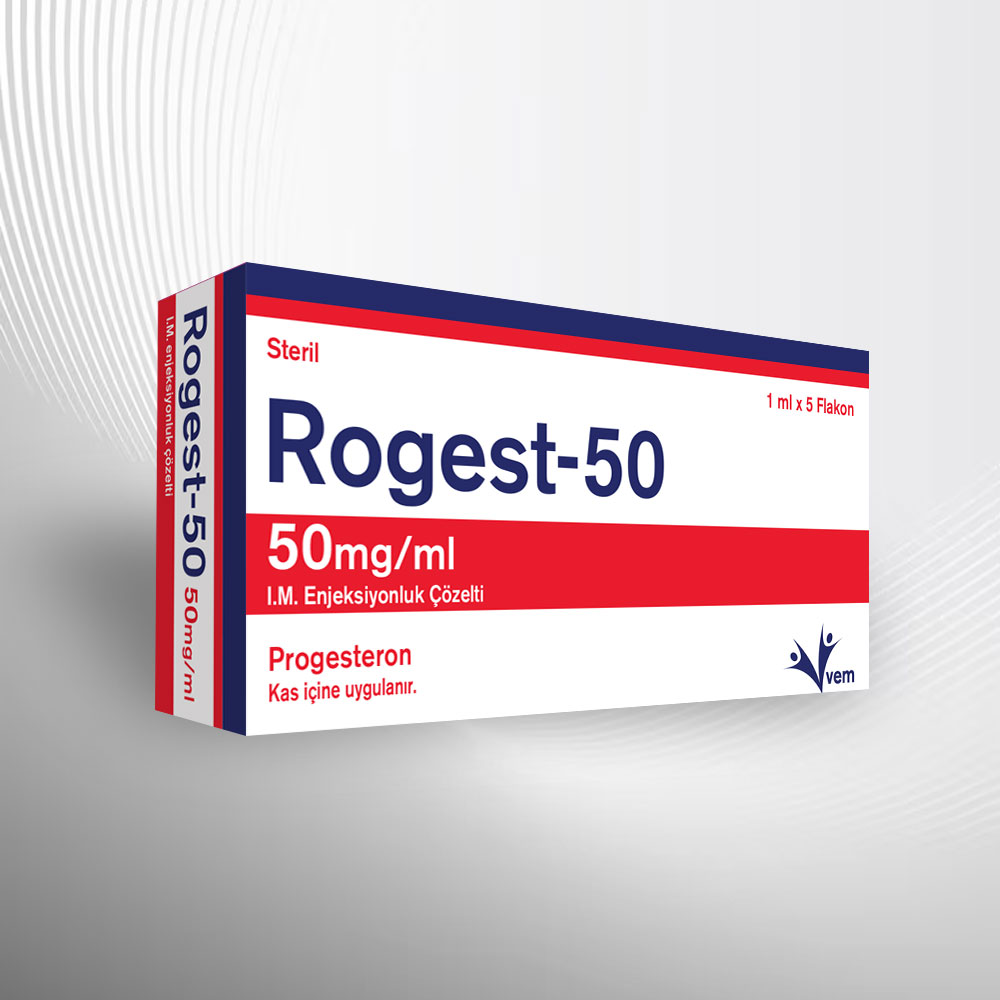
Instructions for use of the drug (for patients)
ROGEST-50 solution for injection
ROGEST-50
International non-proprietary name: Progesterone
Composition
The active substance: 1 ml of oily solution contains 50 mg of progesterone.
Auxiliary substances: benzyl alcohol, ethyl oleate.
Description
It is a transparent colorless homogeneous solution.
Pharmacotherapeutic group
Sex hormones and modulators of the reproductive system, progestogens. Pregnene-(4) derivs.
ATC code:G03DA04.
Pharmacological properties
Pharmacodynamics
Progesterone is a progestogen, the main hormone of the corpus luteum and placenta. It affects the endometrium by turning the proliferative phase into the secretory phase.
Pharmacokinetics
Absorption
The time of peak concentration of doses of 45 and 90 mg during intramuscular use is 28 and 19.6 hours, the peak concentration in serum is 39.1 and 53.8 n/mL. When used intramuscularly, the injection provides depot therapy.
Distribution
The volume of distribution is 17-29 L. Progesterone is used dissolved in an oily solvent. 95-98% bound to plasma proteins, especially albumin and transcortin (corticosteroid-binding globulin, CBG). 10% passes into the cerebrospinal fluid, and a small amount into breast milk.
Biotransformation
It is metabolized in the kidneys, brain, uterus, and skin tissues, and about 65% in the liver. The main metabolites in plasma are 20-hydroxy-Δ-4-pregnenolone and 5α-dihydroprogesterone.
Excretion
Urinary excretion is mainly in the form of 3α,5β-pregnanediol (pregnanediol) and its metabolites combined with glucuronic acid (95%). Its main metabolite, pregnanediol (about 30% of injected progesterone), is combined with glucuronic acid and excreted in urine (50-60%) and feces (10%). 19-40% is detected in urine within 24 hours.
Instructions for use
Rogest-50 is used to treat amenorrhea dysfunctional uterine bleeding.
It is also used to help maintain an early pregnancy after 3 or more unexplained miscarriages and successfully treat infertility with methods such as artificial insemination (IVF) or intrauterine implantation of a fertilized egg to facilitate the passage of the uterus.
Contraindications
Rogest-50 should not be used in people with any of the following conditions.
- Hypersensitivity to progesterone or any of the excipients.
- Undiagnosed vaginal bleeding.
- Delayed or incomplete miscarriages.
- Cancer of the mammary glands or genital tract.
- Thrombophlebitis.
- Intracranial hemorrhage.
- Severe functional disorders of the liver.
Special instructions and precautions
Rogest-50 should be used with caution in patients whose condition is complicated by fluid retention (eg, hypertension, heart disease, kidney disease, epilepsy), mental depression, diabetes mellitus, mild to moderate liver dysfunction, acute intermittent porphyria, migraine, or photosensitivity.
During treatment, if the cause is unknown, sudden or gradual, partial or complete loss of vision, exophthalmos or diplopia, papillary edema, damage to retinal vessels or migraine, the drug should be stopped and appropriate diagnostic and therapeutic measures should be taken.
Interaction with other drugs
Rogest-50 may interact with the effects of bromocriptine. Rogest-50 may affect the results of laboratory tests of liver and/or endocrine functions.
Rogest-50 can increase the plasma concentration of cyclosporine.
Use during pregnancy and lactation
Rogest-50 can be used to protect pregnancy in cases where endogenous progesterone production from the corpus luteum is insufficient.
If placental progesterone is sufficiently secreted, it is not necessary to apply Rogest-50.
Rogest-50 is like the naturally occurring progesterone hormone and is not associated with masculinization of the female fetus like synthetic progestins.
Progesterone passes into breast milk and Rogest-50 should not be taken during breastfeeding.
Effects on the ability to drive vehicles and other potentially dangerous mechanisms
The effect on the ability to drive vehicles and machinery has not been determined.
Method of use and dosage
Dosage
In adults and adolescents:
Amenorrhea: 5-10 mg/day consecutively for 6-10 days or intramuscular injection at a single dose of 100-150 mg.
Dysfunctional uterine bleeding:
Intramuscular injection at a dose of 5-10 mg per day for 5-10 days until 2 days before menstruation.
Pregnancy maintenance:
25-100 mg intramuscular injection twice a week or more often (maximum daily) from about day 15, or from the day of intrauterine implantation of the embryo or fertilized egg, until 8-16 weeks of pregnancy, when progesterone will be secreted from the placenta.
Depending on the doctor's opinion, the daily dose can be increased up to 200 mg.
Side effects
The frequency of side effects is determined by the following parameters:
very often (≥1/10); common (≥1/100 to