Malogel
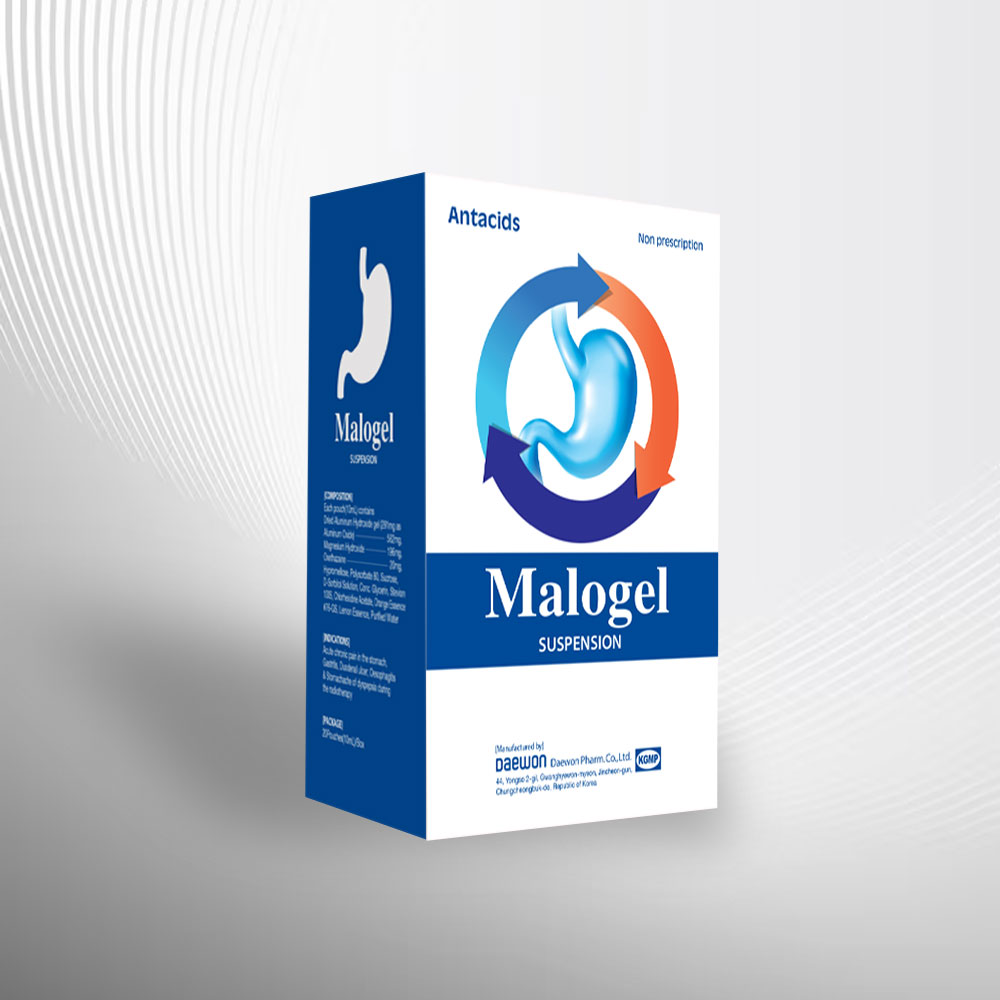
Instructions for use of the drug (for patients)
MALOGEL suspension for admission
MALOGEL
Composition
Active ingredient: In 1 package (10 ml) 582 mg of dry aluminum hydroxide (aluminum oxide 291 mg),
Contains 196 mg of magnesium hydroxide, 20 mg of oxetazine.
Auxiliary substances:hyperomellose, polysorbate 80, sucrose, D-sorbitol solution, thickened
glycerin, stevion 100S, chlorhexidine acetate, orange ore #76-GS, lemon
ore, purified water.
Description
It is a tasty white suspension.
Pharmacotherapeutic group
Antacid agent, other combinations.
ATK code:A02AX.
Pharmacological properties
Pharmacodynamics
Aluminum gel and magnesium hydroxide react chemically to neutralize or reduce the amount of acid present. It has no direct effect on the production of stomach acid. Gastroscopic observations showed that aluminum gel, if taken without dilution, forms a coating on the inflamed mucosa for different periods of time. Oxetazaine is a strong local anesthetic.
The combination of oxetazine with aluminum gel has a long-lasting local anesthetic effect when applied to the mucous membranes. Oxetazine improves general gastrointestinal symptoms.
Oxetazaine is a class of anesthetic antacids that increase gastric pH, while providing pain relief for a longer period of time at a lower dose. This feature is said to eliminate the symptoms of hyperacidity. Oxetazine is reported to cause reversible sensory loss and provide rapid and long-lasting pain relief.In vitro, it was shown that oxetazine has a spasmolytic effect on the muscle and blocks the effect of serotonin.
Pharmacokinetics
Absorption of aluminum and magnesium from antacids is low. Aluminum hydroxide is slowly converted to aluminum chloride in the stomach. A certain amount of soluble aluminum salts is absorbed from the gastrointestinal tract and excreted in the urine. All absorbed magnesium is excreted in the urine. Aluminum-containing antacids should not be prescribed to patients with renal insufficiency due to the possibility of an increase in plasma concentration.
Instructions for use
Acute pain, gastritis, duodenal ulcer, esophagitis and dyspepsia during radiotherapy.
Contraindications
Do not use this medicine in the following patients.
- To the patient who is sensitive to this preparation
- Kidney failure, Dialysis treated patient
- Hypophosphatemia
- It is not used in patients with colon stenosis and acute appendicitis.
Special instructions and precautions
- Patients with a history of hypermagnesemia or magnesium deficiency.
- The drug is not recommended for children.
- In patients with mild or moderate renal impairment, the use of magnesium-containing antacids should be monitored due to the increased risk of hypermagnesemia.
- Due to the accumulation of aluminum in the nervous and skeletal system, caution should be exercised.
- Follow the dosage and the order of use.
- If there is no improvement in symptoms after about 2 weeks of use, stop taking and consult a pharmacist or doctor.
- It should be swallowed quickly to avoid paralysis in the mouth.
- Pain relief is achieved by spreading the suspension on the surface of the damaged mucosa, so no liquid should be drunk shortly after taking it.
- Do not take in repeated long term.
- Patients with kidney disease should consult a doctor or pharmacist before taking
Interaction with other drugs
- When used concurrently with aluminum-containing antacids, the rate and/or extent of renal reabsorption of many drugs may be increased or decreased.
- Examples of these drugs include digoxin, captopril, cimetidine, ranitidine, famotidine, theophylline, propranolol, atenolol, ferrous sulfate, and chlorpromazine, and drugs that increase drug reabsorption include acetylsalicylic acid, naproxen, and metoplevolo.
- To prevent reabsorption of the drug from the kidneys, other drugs should not be taken within one to two hours after taking an antacid.
- Clinical drug interactions are as follows.
- Tetracycline: Drugs reduce renal reabsorption
- Ciprofloxacin, Ofloxacin: Drugs reduce renal reabsorption
- Xenodeoxycholic acid: Drugs reduce renal reabsorption
- Sodium fluoride: Drugs reduce renal reabsorption
- Isoniazid: Drugs alter renal reabsorption
- Enoxazin, norfloxacin, levothyroxine, coumarin derivatives: Drugs inhibit renal reabsorption
Pregnancy and lactation period
Pregnancy
The product should not be used in the first trimester of pregnancy.
Lactation period
The excretion of this drug in breast milk has not yet been determined.
Effects on the ability to drive vehicles and other potentially dangerous mechanisms
No studies on the effect on the ability to drive vehicles and machinery have been conducted.
Method of use and dosage
Adults: ½ -1 packet (1 packet: 10ml), 4 times a day
Shake before use
Side effects
Digestive system: diarrhea, constipation, flatulence.
Phosphate deficiency.
Hypermagnesemia and high-dose renal failure.
Dry mouth or blocked taste, rarely skin rash, paralysis may occur as a result of sensitivity. If these symptoms persist or worsen, seek appropriate treatment, such as dose reduction or discontinuation of therapy, and consult a physician or pharmacist.
Rarely, headache, drowsiness, dizziness and fatigue may occur.
Overdose
Experience with intentional overdose is extremely limited.
In patients with normal renal function, magnesium overdose does not usually lead to the development of toxic reactions. Nevertheless, magnesium intoxication may develop in patients with renal failure (see the sections "Special instructions and precautions"). The toxic effect depends on the concentration of magnesium in the blood serum. Symptoms of toxic effects:
- Lowering of arterial pressure;
- Nausea, vomiting;
- Drowsiness, weakening of reflexes, muscle fatigue, neuromuscular paralysis;
- Bradycardia, changes in ECG results;
- Hypoventilation;
- In more severe cases, respiratory paralysis, coma, kidney or heart failure;
- Anuric syndrome.
Overdose of aluminum salts develops more quickly in patients with severe renal failure and may be accompanied by the following symptoms: encephalopathy, seizures, dementia and hypermagnesemia.
Symptoms of overdose of aluminum hydroxide and magnesium combination are as follows: diarrhea, abdominal pain, vomiting.
In patients with a high risk of developing intestinal obstruction, high doses of the drug can lead to the development or exacerbation of intestinal obstruction or ileal obstruction (see the section "Special instructions and precautions").
Treatment is symptomatic and is carried out along with general supportive therapy.
Aluminum and magnesium are exported through the urinary tract. Treatment of magnesium overdose: rehydration, accelerated diuresis. If renal failure develops, hemodialysis and/or peritoneal dialysis should be performed.
Release form
10 ml suspension in a package. 20 packets are packed in a cardboard box with a leaflet.
Storage conditions
Store in an airtight container below 30ºC, away from sunlight and moisture.
Please note that storing the medicine in a different container instead of its original container may cause inconvenience and may also affect its quality.
Shelf life
3 years.
Do not use after the expiration date.
Discharge conditions from the pharmacy
It is released without a prescription.
Manufacturer
Daewon Pharm. Co., Ltd., Republic of Korea.
44, Yongso 2gil, Gwanghewon-myeon, Jincheon-gun,
Chungcheongbuk-do, Republic of Korea.
Holder of registration card
LN COMPANY LLC, Republic of Azerbaijan.
Khirdalan city, Baku-Guba highway, 12th km,
building 2, No. 3, Republic of Azerbaijan.