Folitime
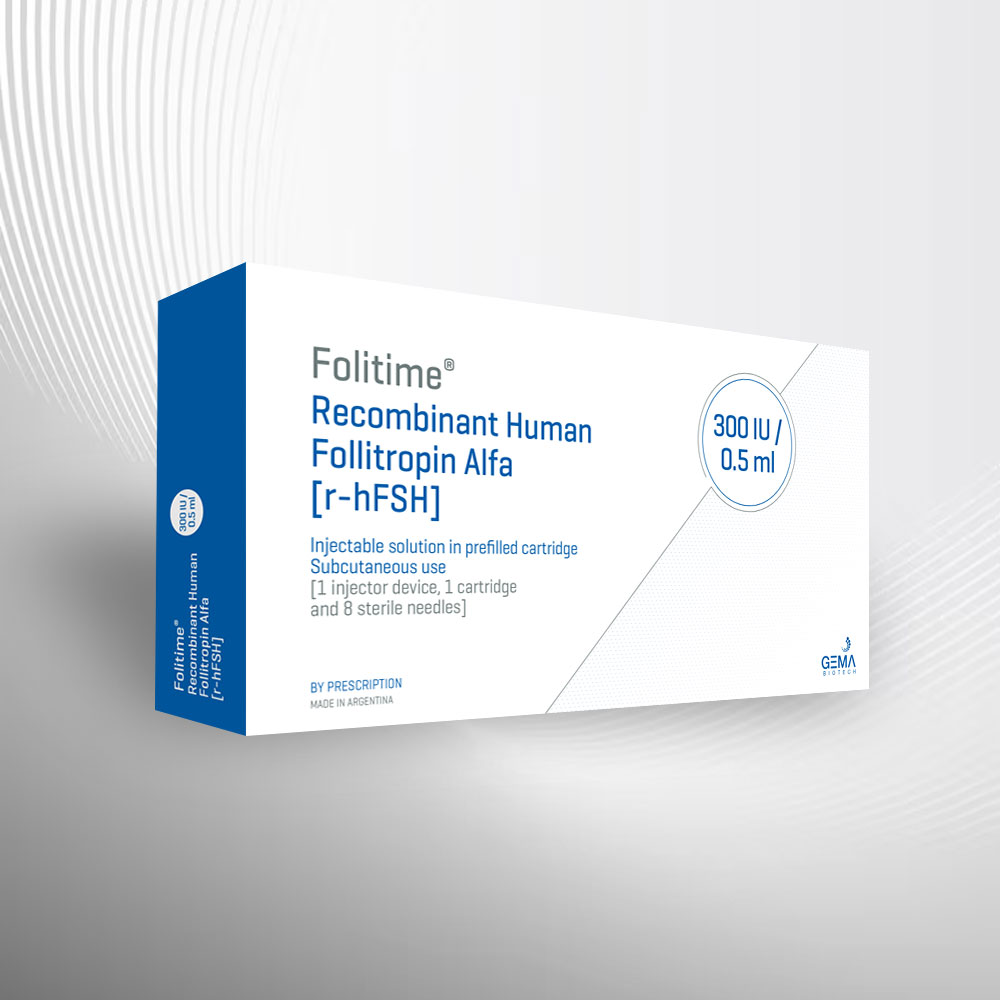
Instructions for use of the drug (for patients)
FOLITIME 300 IU/ solution for injection in a 0.5 ml pre-filled cartridge
FOLITIME®
International non-proprietary name:Recombinant Human Folitropin alpha (r-hFSH)
Composition
The active substance: 300 IU recombinant human follitropin alfa (r-iFSH) in 0.5 ml solution
there is
Auxiliary substances: sucrose, disodium hydrogen phosphate anhydrous, sodium dihydrogen phosphate monohydrate,
L-Methionine, poloxamer 188, M-cresol, water for injection.
Description
It is a clear, colorless or slightly cloudy solution.
Pharmacotherapeutic group
Sex hormones and modulators of the genital system, gonadotropins.
ATC code:G03GA05.
Pharmacological properties
Pharmacodynamics
Mechanism of action
Folitime® is a human recombinant follicle-stimulating hormone (r-iFSH) preparation produced in Chinese mountain mouse ovary (CMOS) cells using recombinant DNA technology. The most important effect after parenteral FSH administration in women is the development of mature Graafian follicles. In anovulatory women, the goal of treatment is to develop a single mature Graafian follicle from which an egg will be released after the use of human chorionic gonadotropin hormone (XGH). In male patients with FSH deficiency, follitropin alfa is prescribed as a spermatogenesis inducer simultaneously with XGH for 4 months.
Pharmacodynamic effects
Inhibin and estradiol (E2) levels rise after r-iFSH administration, followed by induction of follicular development. The increase in inhibin levels in blood plasma is rapid and can be observed on the third day of r-iFSH administration, while E2 levels require more time and the increase is observed only on the fourth day of treatment. Total follicular volume begins to increase 4-5 days after daily administration of r-iFSH, and depending on the patient's response, the maximum effect is achieved approximately 10 days after the start of r-iFSH administration.
Pharmacokinetics
After intravenous administration, follitropin alfa is distributed in the intercellular space. The half-life is 2 hours, and the elimination half-life is about 1 day. In the balanced state of plasma, the volume of distribution is 10 l, and the total clearance is 0.6 l/h. One-eighth of the administered dose of follitropin alfa is excreted in the urine.
Absolute bioabsorption after subcutaneous use is about 70%. After repeated dosing, follitropin alfa accumulates 3-fold and plasma equilibrates within 3-4 days. In women with reduced endogenous gonadotropin secretion, follitropin alfa effectively stimulates follicular development and steroidogenesis, even at undetectable luteinizing hormone (LH) levels.
Instructions for use
In women
Anovulation, including those associated with polycystic ovary syndrome (PCOS), in women unresponsive to treatment with clomiphene citrate. In anovulatory women, the goal of Folitime® treatment is to develop a single mature Graafian follicle from which the egg will be released after the use of XGH.
Stimulation of the development of multiple follicles in superovulating women to perform assisted reproductive technologies (ART) such as in vitro fertilization (IVF), gamete intrauterine transfer (GUDT) and zygote intrauterine transfer (ZUTT).
Folitime®, associated with the preparation of luteinizing hormone (LH), is recommended for the stimulation of follicular development in women with severe LH and FSH deficiency. In clinical trials, these patients were defined by an endogenous blood plasma LH level < 1.2 BV/L.
In men
Folitime® is indicated for simultaneous stimulation of spermatogenesis with XGH in men with congenital or acquired hypogonadotropic hypogonadism.
Contraindications
Folitime® should not be used in the following cases:
- Hypersensitivity to the active substance follitropin alfa, FSH or any of the excipients
- Hypothalamic or pituitary tumors
- Enlargement of the ovaries or cysts unrelated to PCOS (Polycystic Ovarian Syndrome)
- Gynecological bleeding of unknown etiology
- Ovarian, testicular, uterine or breast cancer
- Primary ovarian or testicular failure
- Fibroid derivatives of the uterus
- Genital malformations incompatible with pregnancy.
Special instructions and precautions
The responsibility of all specialists involved in the treatment with gonadotropins also requires appropriate facilities for monitoring and control of patients. Treatment with Folitime® should be carried out under the supervision of a doctor experienced in the treatment of fertility problems.
Folitime® is a potent gonadotropin that can cause adverse reactions.
Responses to Folitime® should be monitored with ultrasound or with regular determination of estradiol levels in blood plasma. The degree of response of patients may vary. In both men and women, the minimum effective dose should be used to achieve the treatment goal.
Independent use of Folitime® will be practiced by patients who have been properly instructed by a specialist.
Before starting treatment, the type of infertility of the couple in women and the presence of possible contraindications for pregnancy should be evaluated. Preexisting hypothyroidism, adrenal insufficiency, hyperprolactinemia, and pituitary or hypothalamic tumors should be evaluated and appropriate specific treatment prescribed.
An increase in ovarian size is an expected effect of controlled ovarian stimulation. It is most commonly seen in women with polycystic ovary syndrome and usually goes away without treatment. The clinical profile of Ovarian Hyperstimulation Syndrome (OHSS) is different from uncomplicated ovarian hyperplasia. This syndrome presents varying degrees depending on its severity, with symptoms such as marked ovarian enlargement, high levels of sex steroids, and increased vascular permeability that can lead to fluid accumulation in the peritoneal, pleural, or pericardial space.
Ovarian Hyperstimulation Syndrome (OHSS) can rapidly become clinically serious. It often occurs after stopping hormone treatment and reaches its maximum intensity about 7-10 days after treatment. Therefore, patients should be followed for at least 2 weeks after administration of XGH. In assisted reproduction techniques, aspiration of all follicles before ovulation can reduce the incidence of hyperstimulation.
Interaction with other drugs
The follicular response may be increased by interaction with clomiphene citrate. The dose of Folitime® can be increased with the simultaneous use of gonadotropin-releasing hormone (GAEH) agonist drugs, which are used to cause pituitary desensitization.
Other significant interactions during treatment with Folitime® have not been described.
Use during pregnancy and lactation
There is no indication for the use of Folitime® during pregnancy. When Folitime® is used, clinical data are insufficient to exclude a teratogenic effect, even if there is no specific description of the occurrence of developmental defects. Animal tests have not shown any teratogenic effects on the offspring. There is no indication during lactation.
Fertility
There are no studies evaluating the potential effect of epoetin alfa on male or female fertility.
Effects on the ability to drive vehicles and other potentially dangerous mechanisms
No studies on the effect on the ability to drive vehicles have been conducted.
Method of use and dosage
Treatment with Folitime® should be carried out under the supervision of a doctor experienced in the treatment of fertility problems.
Folitime® is injected subcutaneously.
Clinical evaluation of Folitime® indicates that the daily doses, dosing schedule, and treatment monitoring procedures should not differ from those currently used for urinary FSH preparations. It is recommended to follow the recommended starting doses below.
Anovulation treatment (including YPKS – polycystic ovary syndrome)
The goal of treatment with Folitime® is to develop a mature Graafian follicle that will release the egg after XGH use. Folitime® can be administered with a cycle of daily injections. In menstruating patients, treatment should begin within the first 7 days of the menstrual cycle. Treatment depends on the patient's response according to the size of the follicles observed and measured on ultrasound and/or estrogen secretion. Treatment can be started with 75-150 IU FSH daily and increased to 37.5 or 75 IU at 7-day intervals or 14 days if necessary to obtain an adequate response. The maximum daily dose is usually not more than 225 BV FSH.
If there is no response after 4 weeks of treatment, treatment should be stopped and treatment should be restarted at a higher initial dose. If the response is optimal, a single dose of 250 mcg r-XGH or 5000-10,000 IU XGH should be used 24-48 hours after the last administration of Folitime®. It is recommended that intercourse or intrauterine insemination be performed on the same day or the next day after XGH administration. If the response to the indicated dose is excessive, FSH and XGH treatment should be stopped and restarted at a lower dose in the next cycle.
Treatment with ovarian stimulation for the development of multiple follicles before in vitro fertilization or other assisted reproductive techniques
The recommended starting dose to achieve superovulation is 150-225 BV Folitime® per day starting on day 2 or 3 of the cycle. Treatment should be continued until adequate follicular development is achieved, depending on serum estrogen levels and/or ultrasound; subsequent doses will be adjusted according to patient response, not exceeding 450 IU daily. Usually, the follicle develops properly before the tenth day of treatment (between 5 and 20 days). A dose of 250 mcg r-XGH or a dose of 5,000 BV to 10,000 BV of XGH should be administered 24-48 hours after the last injection of Folitime® to stimulate maturation of the last follicles.
Your doctor may suggest pituitary inhibition with a gonadotropin-releasing hormone (GAEH) agonist or antagonist to reduce the endogenous LH surge and control its secretion. According to the usual protocol, the use of Folitime® is started approximately 2 weeks after the initiation of agonist treatment, and both treatments are continued until adequate follicular development is achieved. For example, after 2 weeks of treatment with an atomist, 150-225 BV Folitime® is injected for the first 7 days, and then the dose is adjusted according to the response of the ovaries.
Global experience with in vitro fertilization (IVF) methods shows that, in general, the probability of treatment success is stable in the first four attempts and then gradually decreases.
Treatment in women with severe LH and FSH deficiency
The goal of Folitime® treatment with luteinizing hormone (LH) in women with severe LH and FSH deficiency (hypogonadotropic hypogonadism) is to develop a single mature Graafian follicle from which the oocyte will be released after administration of human chorionic gonadotropin hormone (XGH). Folitime® should be given as a cycle of daily injections along with LH. Treatment can be started at any time because these patients are amenorrhoeic and have low endogenous estrogen secretion.
It is recommended to start with 75 BV LH per day along with 75-150 BV FSH. Treatment should be tailored to the patient's individual response and assessed by follicle size determined by ultrasound and estrogen response. If it is appropriate to increase the dose of FSH, adjustments should be made at intervals of 7-14 days and preferably in increments of 37.5-75 BV. In one cycle, the stimulation period can be extended up to 5 weeks.
When an optimal response is obtained, a single injection of 250 mcg r-XGH or 5,000 BV, up to 10,000 BV of XGH should be administered 24-48 hours after the last injection of Folitime® and LH. The patient should have intercourse on the same day of XGH administration or within the next day. Alternatively, intrauterine insemination (IUI) can be performed. After ovulation, the lack of substances with luteotropic activity (LH / XGH) can lead to premature failure of the corpus luteum, so the need for luteal phase support should be considered.
If an excessive response is obtained, treatment should be stopped and XGH should not be prescribed. Treatment should be restarted in the next cycle with a lower dose of FSH.
Treatment in men with hypogonadotropic hypogonadism
Folitime® 150 BV is recommended three times a week at the same time as XGH for a minimum of 4 months. If the patient does not respond after this period, the combined treatment can be continued. Accumulated clinical experience shows that spermatogenesis may require 18 months of treatment.
Precautions to be taken before handling or administering the drug.
Folitime is available in pre-filled cartridges for use in a PEN-type injector device for dose selection and administration.
Instructions for use
1. How to use a pre-filled cartridge in an injector unit?
2. Before starting to use the pre-filled cartridge in the injector device
3. Preparing the pre-filled cartridge for injection.
4. Preparation of the pre-filled cartridge in the injector for the first use.
4.1. Needle placement.
4.2. Air bubble removal and drug flow control.
5. Preparation of the injection site.
6. Dosage determination.
7. Injection.
8. After injection.
9. Removal of the needle.
10. Removing the empty cartridge.
11. How to use the treatment log?
12. Troubleshooting.
1. How to use a pre-filled cartridge in an injector unit?
- The pre-filled cartridge for the injector device is for personal use only, do not let anyone else use it.
- The numbers on the dose indicator reflect the amount of medicine to be applied. Your doctor will tell you the dose to inject each day.
- Your doctor will tell you how many pre-filled cartridges you need for your full treatment.
- Includes treatment journal. You can keep a log of each injection.
- Always inject yourself at the same time as your doctor tells you.
2. Before starting to use the pre-filled cartridge in the injector device
- Wash your hands thoroughly before using the injector. It is important that your hands and the materials you use are clean.
- Gather everything you need, find a clean place and prepare the following items: two alcohol-soaked cotton swabs, a pre-filled cartridge, an injector and a sterile needle for use.
3. Preparing the pre-filled cartridge for injection
3.1. Hold the dosing pen firmly with one hand and remove the cap with the other hand, keep it on a clean and dry surface (see picture).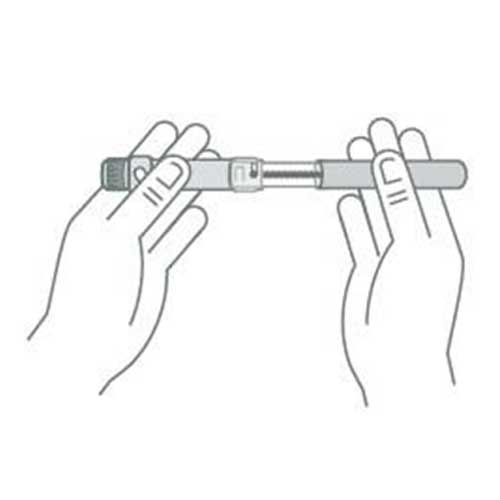
3.2. The injector consists of two cylindrical bodies connected by a bayonet-like system. Hold the cartridge holder firmly, turn the dosing unit a quarter turn, and remove the dosing unit to separate the two parts. Place the dosing unit and cartridge holder on a clean, dry surface (see illustration).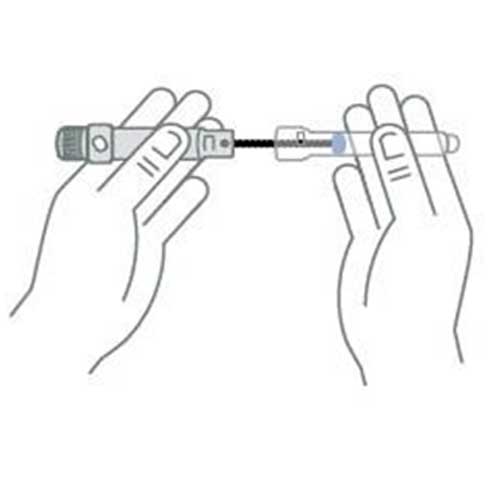
3.3. Remove the cartridge from its container, clean the rubber plug with alcohol. Take the cartridge holder and place it inside the cartridge holder, inserting the end of the metal seal first (see picture).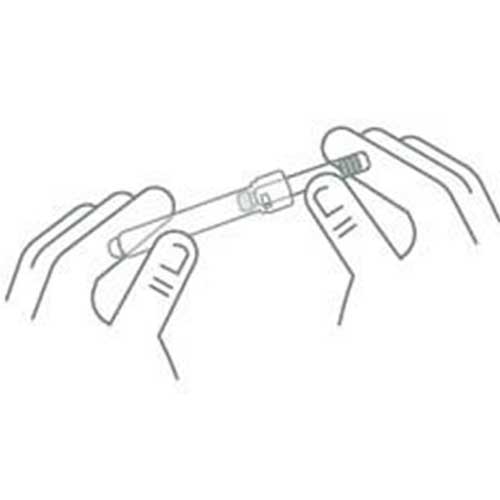
3.4. Take the dosing unit and align its pins with the cartridge holder slots, while the black rod presses against the rubber piston of the cartridge. (see picture).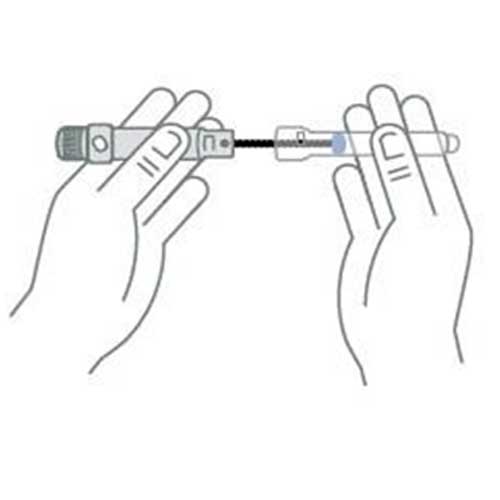
3.5. Firmly hold the cartridge holder and press the dosing unit until it reaches the limit. When finished, turn the dosed unit a quarter turn. (See pictures).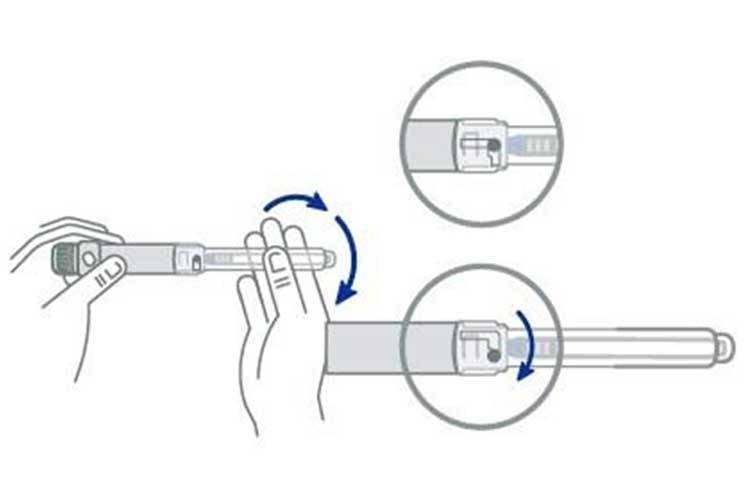
4. Preparation of the pre-filled cartridge in the injector for the first use
If the tip of the cartridge holder is completely filled while holding the pre-filled cartridge with the metal seal facing upwards, a large air bubble may form.
If you see a large air bubble inside the cartridge, you need to remove it. There may be small air bubbles adhering to the inner wall of the cartridge holder. Don't worry about small air bubbles, you don't need to remove them.
- Look carefully at the cartridge.
- Follow the steps listed in section 4.2 to check the drug flow and eliminate possible bubbles
4.1. Needle placement
- Always get a new needle for each injection, use only "disposable" needles.
- Always have the cartridge holder in the cartridge body before inserting a new needle.
- Before inserting the needle, clean the tip of the cartridge holder housing with alcohol (see picture).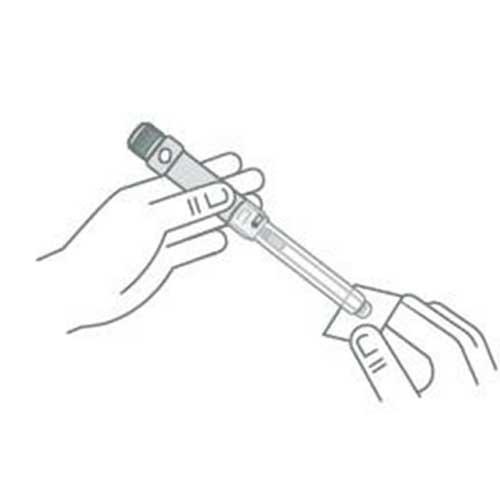
- Take the needle (located inside the protective cap), check that the peel seal of the outer package is not damaged or loose.
- Remove the protective cover, do not touch the needle or place it on any surface. If the seal is damaged or loose, use another needle (see illustration).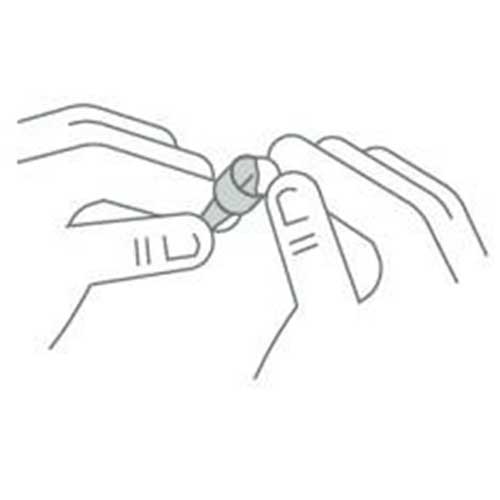
- Hold the outer needle cap firmly while holding the injector with your other hand. Insert the needle into the end of the cartridge housing, press to pierce the seal and close them tightly together. You can place the injector on a flat, clean and dry surface with the needle attached (see pictures).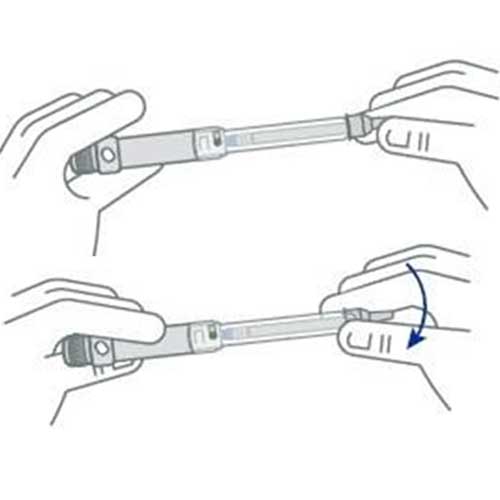
4.2. Air bubble removal and drug flow control
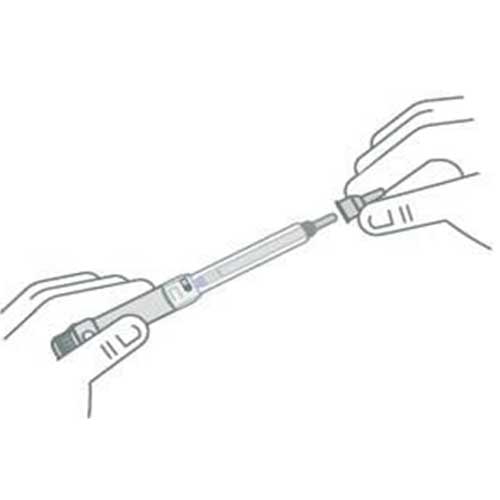
4.2.1. Carefully pull the outer cover off. Leave the inner needle guard in place (see picture). Do not remove the outer needle cap, as you will need it to remove the needle from the injector after the injection.
4.2.2. Gently turn the dose adjustment knob down until you read the first value on the dose indicator (see picture) (if you go past this position, do not go back, turn the dose adjustment knob all the way and then reverse to the start. Repeat this step from the beginning).
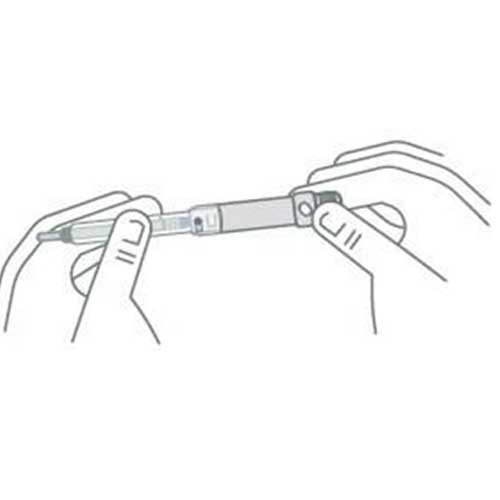
4.2.3. Holding the needle upwards, make small movements so that the air bubbles rise towards the needle.
4.2.4. Carefully remove the inner cover. Do not touch the exposed needle or allow it to touch any surface (see illustration).
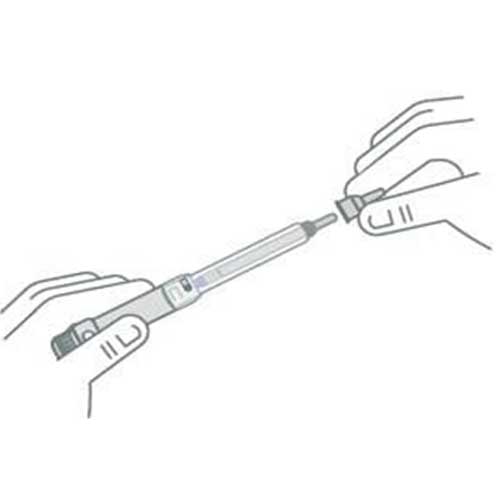
4.2.5. Press the dose adjustment button fully slowly (see picture).
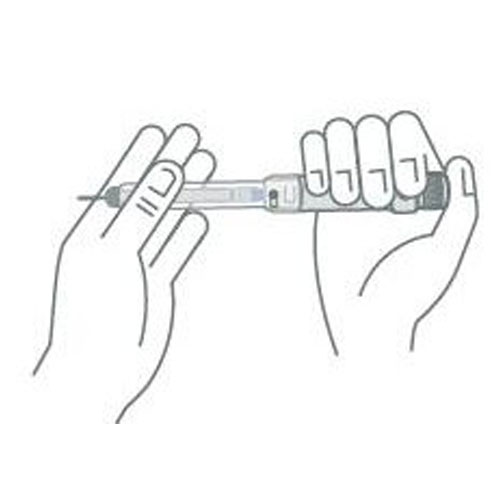
4.2.6. A drop of liquid should appear at the tip of the needle, this indicates that the air bubble has been removed and the drug is flowing from the needle, the pre-filled cartridge is ready for injection.
4.2.7. If you see no liquid and the dosing window shows 0, repeat step 2 to the end until a drop appears. If the dosing window does not read 0, the needle may be clogged and needs to be replaced. See step 9.
5. Preparation of the injection site
- Select the injection site according to the instructions given by your doctor. Choose a different injection site each day to minimize skin irritation.
- Use a cotton swab moistened with alcohol to clean the area where the needle will be inserted. Clean about 5 cm around the area to be injected, dry for a few seconds before injecting the medicine.
6. Dosage determination
- Set the dose you need by turning the dose adjustment knob until you read the dose prescribed by your doctor in the dosing window. Do not push or pull while turning the dose adjustment knob.
- If you miss a dose, simply keep turning the knob all the way and then reverse it and start the adjustment process all over again until you get the correct dose.
The dose indicator should now show the dose prescribed by your doctor.
7. Dose of injection
- Check the dose indicated by the dose indicator again. If it is not set, you must adjust it as described in point 6.
- Press the area with the previously cleaned alcohol with your fingers.
- Insert the needle into the skin with the hand holding the injector. Press the injection button all the way, making sure to inject completely. Allow the needle to remain in the skin for at least 10 seconds by pressing the dose adjustment button (see picture).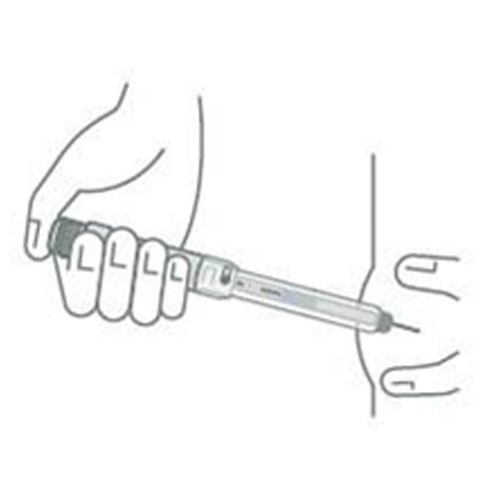
- Continue pressing the injection button until the needle is removed from the skin. This ensures that the entire dose is injected.
- Remove the injector together with the needle and firmly press the injection site with a cotton swab soaked in alcohol (see picture). Release the button.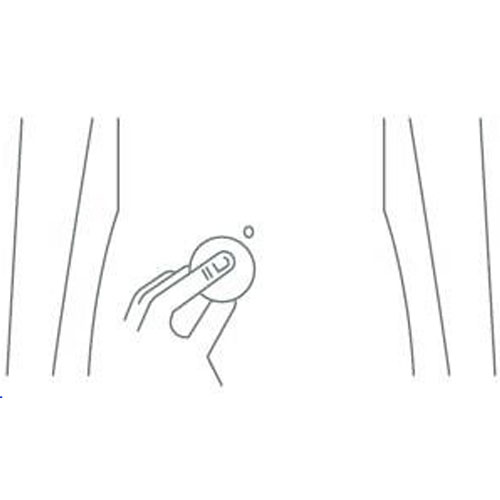
NOTE:Be careful when removing the needle from the skin, as the tip of the needle can accidentally transfer potentially serious infections.
8. After injection
- Make sure you inject yourself completely; check that the dosing window shows 0. This confirms that the dose is complete.
Attention
If the dose indicator shows a value other than 0, this indicates that the pre-filled cartridge has been emptied and the dose has not been fully delivered (see paragraph 10 "Removing an empty cartridge"). If this happens, do the following:
- The number shown in the dose indicator shows the amount of medicine that is missing to complete the dose. This is the dose you should give yourself with a new cartridge. Record this value in the treatment log.
- To complete your dose, follow steps 9 and 10, and then complete the steps described in step 2, “Before you start using the pre-filled cartridge” through step 6, “Dose determination”.
- The prescribed dose corresponds to the value mentioned in the previous paragraph in the treatment journal. After doing this, inject this amount with a new cartridge (point 7). Don't forget to change the needle.
9. Removal of the needle
Place the outer needle cap on a flat surface with the open end facing up. Without holding the outer needle cap, pick up the injector and carefully insert the needle into the cap opening and push down firmly. The outer needle cap must be assembled into the cartridge holder and the needle must be covered (see picture).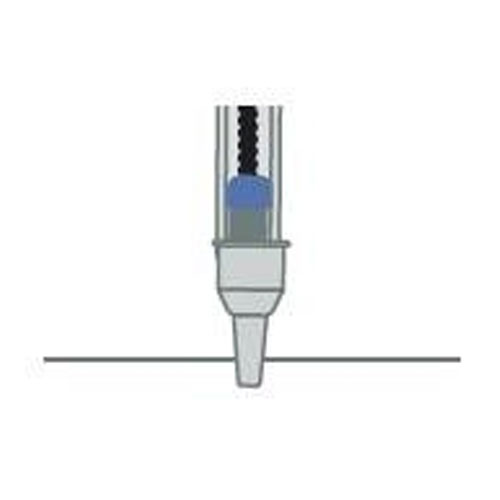
- With your other hand, take the outer needle cap that holds the pen. Remove it from the cartridge holder (see picture).
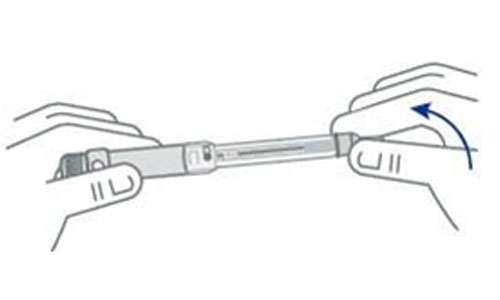
- Carefully discard the outer cap containing the used needle. If the liquid for the additional injection is still in the cartridge, put the cap on the injector and store the device in a safe place at the storage temperature indicated for the medicine.
10. Removing the empty cartridge
- Hold the cartridge holder firmly and turn the dosing unit a quarter turn, pull on the dosing unit to separate the two parts (see Figures).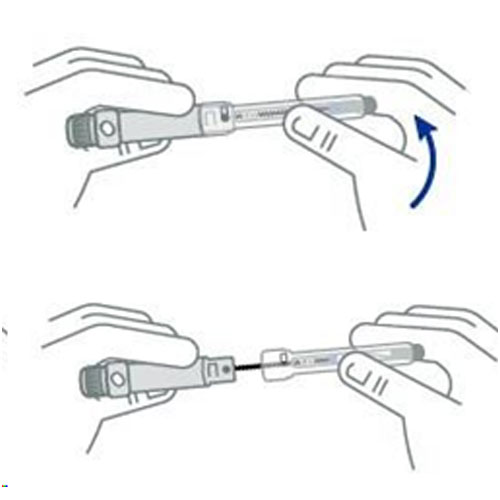
- Place the dosing device on a clean surface and remove the empty cartridge from the holder. Throw away the empty cartridge immediately (see picture).
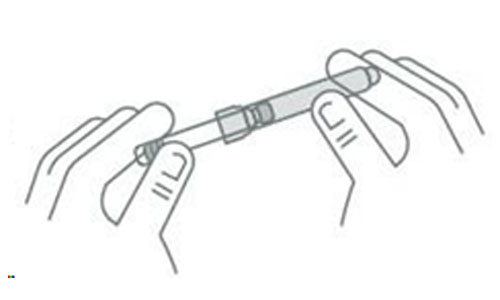
- After this operation, you can store the assembled device without the cartridge (as indicated in paragraphs 3.4 and 3.5) for the next injection, you can store the device in a safe place at the indicated storage temperature.
DETAILED INFORMATION
Injector service
1. Protect the pen from dust or dirt.
2. Wipe all exposed surfaces of the injector with a clean, damp cloth. Never clean under water with detergents or strong disinfectants.
3. Hold the pen carefully. It can be damaged if dropped or handled roughly.
4. If the pen is broken or damaged, do not attempt to repair it. Contact your doctor to get a new one.
Injector storage (filled with cartridge)
1. Store the injector in the conditions indicated for the drug.
2. Both the injector and the cartridge must be protected from light.
3. Do not use the drug cartridges after the expiration date of the drug or according to the advice of your doctor.
4. Keep the injector, cartridges and any other components out of the reach and sight of children.
5. After your treatment is finished, store the injector as directed by your doctor or qualified personnel.
Safety precautions and injector storage
- Before using the injector, carefully read the instructions for use and check the expiration date of the product. Do not use if expired.
- Do not operate the injector without or with an empty cartridge.
- Do not press the injection button until you are ready to inject.
- The injector should only be used individually. Not to be shared.
- When handling the injector, be careful not to point the needle at yourself or others.
- Always keep the injector in a safe place, inside its container.
- Do not try to repair the injector, if there is any malfunction, it must be discarded and replaced with a new one.
- Never dial your dose or try to adjust it with a needle that has already been inserted into your skin, as this may result in an incorrect dose.
- In case of accidental spillage, check the integrity of the product and wipe the surface of the injector with a clean cloth moistened with water and alcohol and dry immediately. Do not immerse in water.
- If it is broken, it should be thrown away and replaced with a new one.
- To be used only with needles suitable for pen devices.
- Before starting to use the equipment, make sure that the drug is intended for administration.
- Do not use and/or modify the injector for purposes other than its intended purpose. Use only with medications prescribed by a doctor.
- Keep the injector out of the reach of children.
- Do not expose to sunlight. Store the medicine at the temperature indicated on the cartridge. Do not freeze.
- If you have any questions about the use of the equipment or for a purpose not included in the instructions, consult your doctor.
- Before using the product, check that it is in good condition and make sure that all parts are assembled.
- Clean the surface of the injector with a clean cloth moistened with water and alcohol and dry immediately. Clean before and after each use. Do not clean the equipment with products other than those specified.
- Do not immerse in water or other liquids.
- Do not touch or leave the needle uncovered.
- Use a new sterile needle for each application.
- Do not leave needles where others can take them.
Side effects
Local reactions at the injection site (pain, redness, bruising, irritation) are common.
Mild to moderate ovarian hyperstimulation syndrome (OHSS) is often observed, which should be considered an intrinsic risk of the stimulation process. Severe ovarian hyperstimulation syndrome is rare. Other side effects and their frequency are presented in the table below.
|
Negative impact |
Species |
Frequency |
|
Treatment in women |
Ovarian cysts - mild reactions at the application site, headache, ovarian cysts. |
Very often |
|
Ovarian hyperstimulation syndrome - |
Often |
|
|
Severe ovarian hyperstimulation syndrome |
Sometimes |
|
|
Ovarian Torsion – Complications of Ovarian Hyperstimulation Syndrome |
Rare |
|
|
Thromboembolism - Mild systemic allergic reactions (erythema - rash - facial edema - asthma) |
Very rare |
|
|
Treatment in men |
Gynecomastia - acne - weight gain, varicocele |
Often |
|
|
Mild systemic allergic reactions (erythema – rash – asthma) |
Very rare |
Overdose
Ovarian hyperstimulation syndrome may occur in cases of overdose. Contact the nearest hospital or Poison Control Center.
Release form
0.5 ml solution in a pre-filled cartridge. Packed in a cardboard box with 1 cartridge, 8 sterile needles for use, an injector device and a leaflet.
0.5 ml solution in a pre-filled cartridge. 1 cartridge is packed in a cardboard box with an insert.
Storage conditions
It should be stored at a temperature of 2-8ºC (refrigerator), in the original packaging in order to protect from light and out of the reach of children. Do not freeze.
Shelf life
3 years.
Do not use after the expiration date.
Condition of release from pharmacy
It is released on the basis of a prescription.
Manufacturer
GEMABIOTECH S.A.U, Argentina.
Fray Justo Sarmiento 2350, Olivos, CP: B1636AKJ, Buenos Aires, Argentina.
Holder of registration card
LN company LLC, Republic of Azerbaijan.
Khirdalan city, Baku-Guba highway, 12th km, building 2, No. 3, Republic of Azerbaijan.