Estova
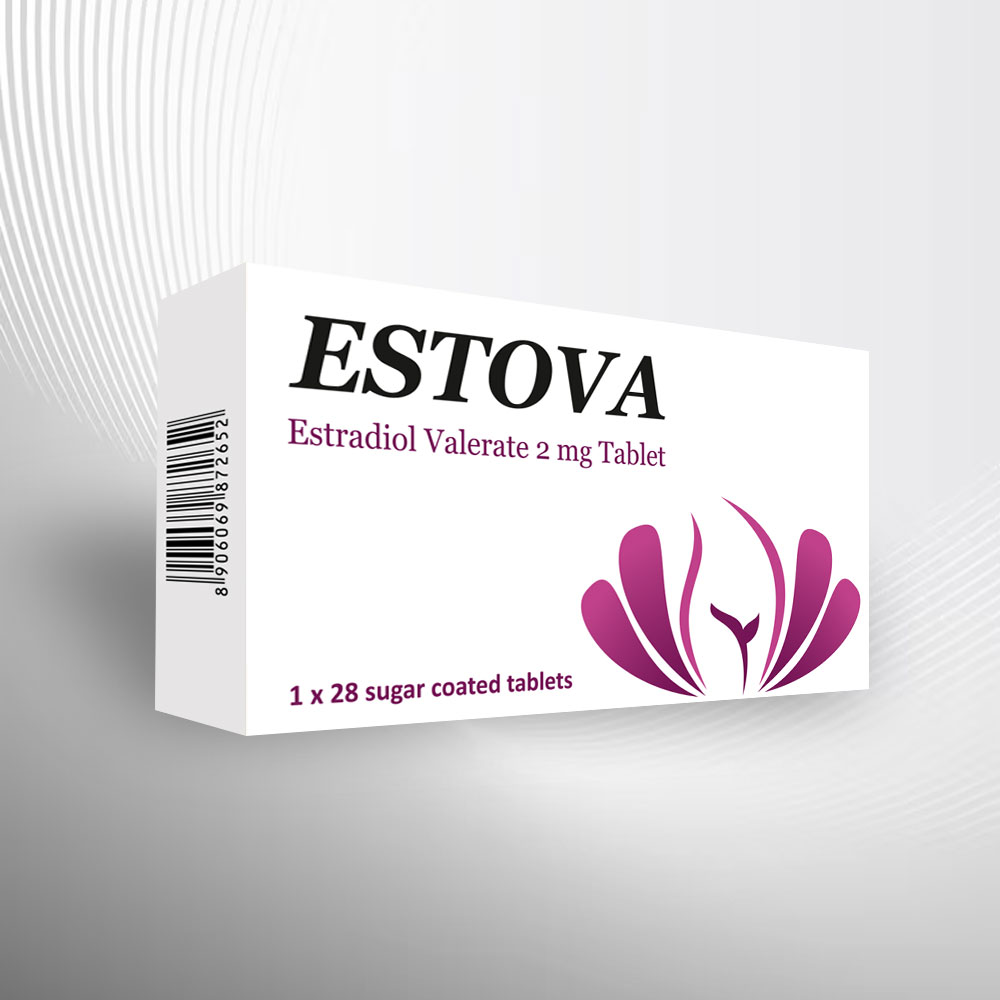
Instructions for use of the drug (for patients)
ESTOVA coated tablets
ESTOVA
International non-proprietary name:Estradiol valerate
Composition
The active substance: 1 tablet contains 2 mg of estradiol valerate.
Auxiliary substances: microcrystalline cellulose (PH 102), sucrose, lactose monohydrate, refined talc,
magnesium stearate, croscarmellose sodium, shellac, isopropyl alcohol, erythrosine, titanium
dioxide, gelatin, carnauba wax, beeswax, chloroform, purified water.
Description
They are pink, round, convex, sugar-coated tablets.
Pharmacotherapeutic group
Sex hormones and modulators of the genital system, natural and semi-synthetic estrogens,
ATC code:G03CA03.
Pharmacological properties
Pharmacodynamics
Estradiol/estradiol valerate
Estovan contains estradiol valerate (valeric acid ester of endogenous female estrogen, estradiol).
Estradiol valerate, the active ingredient that is a prodrug of synthetic 17ß-estradiol, is chemically and biologically identical to endogenous human estradiol. It replaces the loss of estrogen production in menopausal women and relieves menopausal symptoms. Estrogens prevent osteoporosis after menopause or oophorectomy.
During the use of Estovan, ovulation is not inhibited and the endogenous production of hormones is not prevented.
Pharmacokinetics
Absorption
After oral administration, estradiol valerate is rapidly and completely absorbed.
Distribution
After 0.5-3 hours, peak plasma levels of estradiol, the active drug substance, are measured. As a rule, the second maximum is observed after 6-8 hours, indicating the enterohepatic circulation of estradiol.
In plasma, estradiol is mainly in protein-bound form. Approximately 37% of sex hormones are bound to binding globulin (CHBQ), and 61% to albumin. It is not necessary to wait for the accumulation of estradiol after daily repeated reception of Estovan.
The major bioavailability of estradiol is 3-5% of an oral dose of estradiol valerate.
Biotransformation
Esterases in plasma and liver rapidly break down estradiol valerate into estradiol and valerate acid. Further cleavage of valerate acid by β-oxidation leads to C2 units and results in CO2 and water as end products. Estradiol itself undergoes several hydroxylation steps. Its metabolites, as well as the unchanged substance, undergo complete conjugation. Intermediate products of metabolism are estrone and estriol, which themselves exhibit weak estrogenic activity, although this activity is not as pronounced as that of estradiol. The plasma concentration of conjugated estrone is approximately 25-30 times higher than that of unconjugated estrone. In a study using radiolabeled estradiol valerate, approximately 20% of the radioactivity in plasma could be characterized as unconjugated steroids, 17% as glucuronidated steroids, and 33% as steroid sulfates. About 30% of all substances are not known to be removed from the aqueous phase and therefore probably represent highly polar metabolites.
Excretion
Estradiol and its metabolites are mainly excreted by the kidneys (urine to feces ratio = 9:1). About 78-96% of the administered dose is eliminated within 5 days, with a half-life of about 27 hours.
Instructions for use
Hormone replacement therapy (HRT) for symptoms of estrogen deficiency in peri- and postmenopausal women.
Primary and secondary amenorrhea. Hypoplasia of reproductive organs.
Prevention of osteoporosis in postmenopausal women at high risk of future fracture who cannot take or are contraindicated in other drugs approved for the prevention of osteoporosis.
Contraindications
Known, past or suspected breast cancer
- Known or suspected estrogen-dependent malignancies, eg, endometrial cancer
- Undiagnosed genital bleeding
- Untreated endometrial hyperplasia
- Previous idiopathic or current venous thromboembolism (deep venous thrombosis, pulmonary embolism)
- Known thrombophilia disorders
- Active or new arterial thromboembolic disease, e.g. angina pectoris, myocardial infarction
- A history of acute liver disease or liver disease with abnormal liver function tests
- Hypersensitivity to the active ingredients or any of the excipients
- Porphyria
- Pregnancy and lactation period.
Special instructions and precautions
For the treatment of postmenopausal symptoms, HRT should be initiated only for symptoms that have a negative impact on quality of life. In all cases, a careful evaluation of the risks and benefits should be continued at least annually and only when the benefits outweigh the risks.
Evidence on the risks associated with HCT in the treatment of early menopause is limited. Because of the lower absolute risk in younger women, the balance of benefits and risks may be more favorable for these women than for older women.
Medical examination/supervision
A complete personal and family medical history should be obtained before starting or resuming HRT. Physical examination (including pelvis and chest) based on contraindications and warnings. It is recommended that the frequency and nature of the examination during the treatment should be in accordance with the individual characteristics of the woman. Women should tell their doctor or nurse about any changes in their mammary glands. Investigations, including appropriate imaging modalities such as mammography, should be performed according to currently accepted screening practices, modified to suit the clinical needs of the individual.
Conditions requiring supervision
The patient should be closely monitored if any of the following conditions have occurred previously and/or worsened during pregnancy or prior hormone therapy. It should be noted that these conditions may recur or worsen during treatment with Estova, in particular:
- Leiomyoma (childhood myoma) or endometriosis
- Risk factors for thromboembolic disorders
- Risk factors for estrogen-dependent tumors, e.g. 1st degree heredity for breast cancer
- Hypertension
- Liver diseases (eg, liver adenoma)
- Diabetes with or without vascular damage
- Cholelithiasis
- Migraine or (severe) headache
- Systemic urticaria
- History of endometrial hyperplasia
- Epilepsy
- Asthma
- Otosclerosis
- Hereditary angioneurotic edema.
Reasons for immediate discontinuation of therapy
Therapy should be stopped if a contraindication is found and in the following cases:
- jaundice or deterioration of liver function;
- significant increase in arterial pressure;
- new-onset migraine headaches;
- pregnancy.
Interaction with other drugs
Substances that increase the clearance of sex hormones (decreased effectiveness by induction of the enzyme), e.g
Estrogen metabolism may be increased by concomitant use of drugs that induce drug-metabolizing enzymes, especially cytochrome P450 enzymes, such as anticonvulsants (eg, barbiturates, phenytoin, primidone, carbamazepine) and anti-infectives (eg, rifampicin, rifabutin, nevirapine, efavirenz), and possibly felbamate, griseofulvin, oxcarbazepine, topiramate, and those containing St. John's wort (Hypericum perforatum) herbal products.
Clinically, the increased metabolism of estrogens and progestogens can lead to reduced effects and changes in the uterine bleeding profile.
Enzyme induction can already be observed after a few days of treatment. Maximum enzyme induction is usually observed within several weeks. Enzyme induction may continue for about 4 weeks after stopping drug treatment.
Substances that have a variable effect on the clearance of sex hormones
When used with sex hormones, many combinations of AIDS protease inhibitors and non-nucleoside reverse transcriptase inhibitors, including combinations with HCV inhibitors, can increase or decrease the plasma concentration of estrogen. The net effect of these changes may be clinically significant in some cases.
Therefore, prescribers of concomitant AIDS/HCV medications should be consulted to determine potential interactions and any appropriate recommendations.
Substances that reduce the clearance of sex hormones (enzyme inhibitors)
Strong and moderate CYP3A4 inhibitors such as azole antifungal drugs (eg, fluconazole, itraconazole, ketoconazole, voriconazole), verapamil, macrolides (eg, clarithromycin, erythromycin), diltiazem, and grapefruit juice can increase the concentration of estrogen in the blood plasma.
Use during pregnancy and lactation
Estova is not used during pregnancy. If pregnancy occurs during treatment with Estova, treatment should be stopped immediately.
Based on the results of most epidemiological studies, there is no evidence of teratogenic or fetotoxic effects of estrogens on the fetus.
Estova is not prescribed during lactation.
Effects on the ability to drive vehicles and other potentially dangerous mechanisms
No studies on the effect on the ability to drive vehicles and machinery have been conducted. Effects on the ability to work with cars and mechanisms of those who use Estova have not been observed.
Method of use and dosage
Estova is a product containing estradiol. Estradiol valerate 2 mg tablets should be taken once a day. It does not matter what time of the day a woman takes the tablet, but after choosing a certain time, she must follow it every day. The treatment is continuous, that is, the next batch is immediately continued without interruption.
The lowest effective dose should be used for the shortest duration to initiate and maintain treatment of menopausal symptoms. To control menopausal symptoms, treatment should be started with Estova 1 mg. Estradiol valerate 2 mg tablets should be used if necessary. Once treatment is established, the lowest effective dose needed to relieve symptoms should be used.
For the prevention of postmenopausal osteoporosis, one tablet of Estradiol valerate 2 mg per day should be taken.
In women with an intact uterus, Estova should be supplemented with a progestogen for at least 12-14 days of each month/28-day cycle. In the absence of a previous diagnosis of endometriosis, it is not recommended to add progestogen to women who have had their uterus removed.
How to start Estova 2 mg.
If the woman's uterus is intact and still menstruating, the combination treatment regimen with Estova and progestogen should start from the first day of bleeding, starting with the estrogen phase. If menstruation is very rare or amenorrhea is detected and pregnancy is excluded, treatment can be started at any time.
In women, the transition from continuous combined HRT to treatment with Estova can be started on any day.
In women undergoing a cyclic or continuous HRT scheme, they should complete the course of treatment and then switch to Estova without a break in therapy.
Missed or lost tablets.
If a woman forgets to take a tablet at the usual time, she can take it within the next 12 hours. If the woman is more than 12 hours late, the missed tablet should not be taken and the remaining tablets should be taken at the usual time on the following days. A missed dose can cause severe bleeding or bloody discharge.
Special population
Liver failure
Estova is contraindicated in women with or with a history of liver tumors and severe liver disease (see section "Contraindications"). In women with impaired liver function, strict monitoring is required, and in case of deterioration of liver function markers, the use of HTC should be discontinued (see the section "Special instructions and precautions").
Elderly patients
There are no data indicating the need for dose adjustment in elderly patients.
Patients with liver failure
Estova has not been specifically studied in patients with hepatic impairment. Estova is contraindicated in women with severe liver disease. Women with impaired liver function should be carefully monitored, and HTC should be discontinued if liver function markers worsen.
Patients with renal failure
Estova has not been specifically studied in patients with renal impairment.
Tablets can be taken regardless of food. Tablets should be swallowed whole with a glass of water or milk. Tablets should be taken at the same time every day.
Side effects
In clinical trials, hepatitis C with or without dasabuvir combined treatment with ombitasvir/paritaprevir/ritonavir, ALT >5 times the upper limit of normal was significantly more common in women using ethinyl estradiol-containing medicinal products such as combined hormonal contraceptives (CHCs).
Women who used medications containing estrogens other than ethinyl estradiol, such as estradiol, had similar elevations in ALT to those who did not take any estrogen; however, due to the limited number of women taking other estrogens, caution should be exercised when using the combination regimen of ombitasvir/paritaprevir/ritonavir with or without dasabuvir and glecaprevir/pibrentasvir.
Additional effects such as hypersensitivity, weight gain or loss, headache, dizziness, migraine, visual disturbances, abdominal pain, nausea, foaming, vomiting, itching, rash, hirsutism, acne, muscle spasms, vaginal bleeding, mammary gland pain, dysmenorrhea, edema, and fatigue may be observed.
Overdose
Overdose may cause nausea and vomiting, and some women may experience some vaginal bleeding. There are no specific antidotes and treatment should be symptomatic.
Release form
28 tablets in aluminum foil and PVC blister. Packed in a cardboard box with 1 blister pack.
Storage conditions
It should be stored at a temperature not higher than 30oC and out of the reach of children.
Shelf life
2 years.
Do not use after the expiration date.
Condition of release from pharmacy
It is released on the basis of a prescription.
Iproducer
Accent Pharmaceuticals & Diagnostics
Village Bhalon (Seri), Forest Road, Solan.
Holder of registration card
LN COMPANY LLC, Republic of Azerbaijan.
Khirdalan city, Baku-Guba highway, 12th km, building 2, N.3.