Depam
Instructions for use of the drug (for patients)
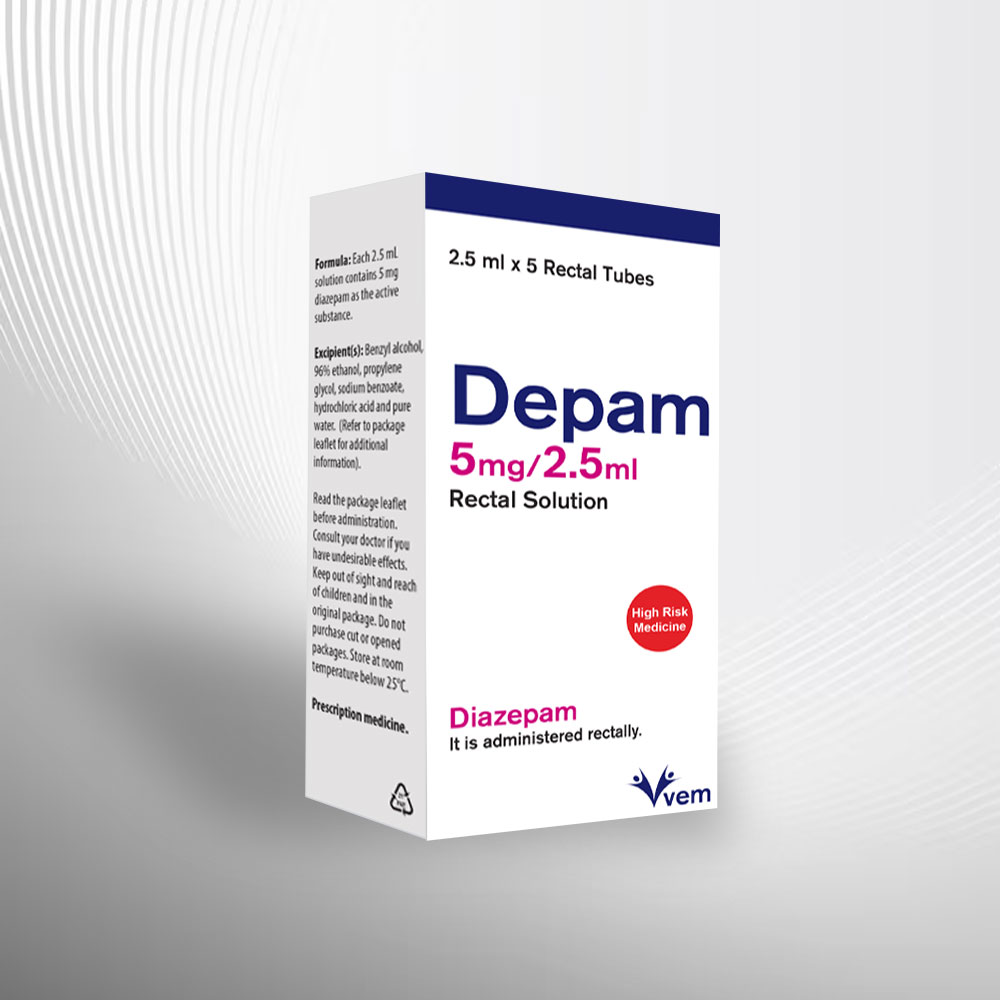
DEPAM 5 mg/2.5 ml; 10 mg/2.5 ml rectal solution
DEPAM
International non-proprietary name:Diazepam
Composition
Active ingredient: 2.5 ml of solution contains 5 mg or 10 mg of diazepam.
Auxiliary substances:benzyl alcohol, ethanol 96%, propylene glycol, sodium benzoate (E211), pH
10% hydrochloric acid, purified water for adjustment.
Description
It is a clear, colorless or light yellow, sticky (viscous) liquid in vials for rectal use.
Pharmacotherapeutic group
Anxiolytics. Benzodiazepine derivatives.
ATC code:N05BA01.
Pharmacological properties
Pharmacodynamics
Diazepam is a psychotropic substance belonging to the class of 1,4-benzodiazepines, characterized by the properties of reducing tension, excitement and anxiety, as well as having calming (sedative) and hypnotic (hypnotic) effects. In addition, diazepam has a muscle relaxant (myorelaxant) and anticonvulsant (anticonvulsant) effect. Diazepam is used in cases of short-term anxiety and tension, for sedative and premedication purposes, in the elimination of muscle spasms, and in the treatment of withdrawal symptoms from alcohol addiction.
Diazepam binds to specific receptors located in the central nervous system and some peripheral organs. Benzodiazepine receptors in the central nervous system are functionally closely related to receptors of the GABA-ergic neurotransmitter system. After binding to these receptors, diazepam enhances the inhibitory (calming) effect of GABA-ergic transmission.
Pharmacokinetics
Absorption
After rectal use, diazepam is rapidly and almost completely absorbed from the rectum. The onset of the therapeutic effect occurs within a few minutes. The rapid rise in blood levels of diazepam after rectal administration roughly corresponds to the rate observed after intravenous dosing, but the peak plasma concentration after rectal administration is relatively lower than after intravenous administration.
In adults, after the use of 10 mg of diazepam in the form of a rectal solution, the maximum plasma concentration is reached in about 10-30 minutes (about 150-400 ng/ml).
Distribution
Diazepam is highly bound to proteins (95-99%). The volume of distribution varies from 0.95 to 2 l/kg depending on age. Diazepam is lipophilic and quickly enters the cerebrospinal fluid. Diazepam and its main metabolite N-desmethyldiazepam (nordiazepam) cross the placenta and are excreted in breast milk.
Biotransformation
Diazepam is mainly metabolized in the liver. Its metabolites — N-desmethyldiazepam (nordiazepam), temazepam and oxazepam — are detected in urine as glucuronides and are pharmacologically active substances. During the first 72 hours, only 20% of these metabolites are determined in the urine.
Diazepam has a two-phase half-life: first, a rapid distribution phase, followed by a long-term elimination phase lasting 1-2 days.
The half-lives for active metabolites are approximately as follows: N-desmethyldiazepam: 30-100 hours, Temazepam: 10-20 hours, Oxazepam: 5-15 hours.
Elimination
The metabolism and elimination process of diazepam in newborns is much slower than in children and adults. In elderly patients, elimination is prolonged by 2-4 times. The elimination period is prolonged in patients with impaired renal function. Elimination lasts twice as long in patients with liver pathology (cirrhosis, hepatitis). In general, elimination depends on age, liver and kidney function.
Characteristics of patients
Liver/Kidney failure
Elimination time of diazepam is prolonged in patients with renal failure. In case of liver diseases (cirrhosis, hepatitis), elimination is prolonged by about 2 times.
Age
Metabolism and elimination processes in newborns are slower than in children and adults. Elimination takes 2-4 times longer in elderly patients.
Instructions for use
It is used in epileptic and febrile seizures, to relieve muscle spasm caused by tetanus, as a sedative in minor surgical and dental procedures, and as an initial treatment for acute anxiety, panic, and agitation disorders. When intravenous injection is not possible or appropriate, rectal use is recommended in cases where a rapid effect is required. It can be especially useful in the emergency treatment of seizures in children.
Contraindications
Diazepam is contraindicated in cases of hypersensitivity to benzodiazepines or any of its excipients, in cases of depression and anxiety, especially in patients with a diagnosis of depression (due to the risk of suicide) as monotherapy, in myasthenia gravis, in people with acute respiratory failure, in sleep apnea syndrome, in severe liver failure, in premature babies (due to the content of benzyl alcohol) and in pregnant women.
Special instructions and precautions
It should be used with caution in patients with impaired kidney or liver function, chronic lung failure, porphyria, narrow-angle glaucoma, organic brain changes (especially arteriosclerosis). It can increase the effect of other drugs affecting the central nervous system and should not be used simultaneously with them. Concomitant use with benzodiazepines may be associated with amnesia (memory loss) and, as psychological adaptation is necessary, diazepam should not be used in cases of bereavement or grief. Not recommended for initial treatment of psychotic disorders. It should not be used alone in phobic and obsessive cases, as well as in the treatment of depression or depression-related anxiety, as there may be a risk of suicide in this patient group. It should be used with caution in patients with a history of alcohol or drug addiction. As with other benzodiazepines, extreme caution should be used when prescribing diazepam to patients with personality disorders. Should not be given to children without careful evaluation. The duration of treatment should be kept as short as possible. Elderly and debilitated patients should be given lower doses because they are more sensitive to the central nervous system effects of benzodiazepines. Lower doses are recommended for patients with acute respiratory failure. It is not recommended for use in patients with severe liver failure due to encephalopathy. The risk of addiction is low in short-term use. Even after short-term therapeutic dose use, benzodiazepine withdrawal symptoms may occur: headache, muscle pain, severe anxiety, tension, restlessness, and irritability. In severe cases, these symptoms can be observed: detachment from reality, loss of personality, sensitivity to sounds, numbness and tingling in the extremities, sensitivity to light, sound and touch, hallucinations or epileptic seizures. These cases should be considered in patients treated for more than a few days. Abrupt discontinuation of treatment may cause convulsions or status epilepticus in patients with a history of epilepsy or convulsions. Convulsions may also occur in patients with alcohol or drug addiction when treatment is abruptly stopped.
Rebound insomnia and restlessness: a transient syndrome characterized by a return of benzodiazepine-induced symptoms with greater severity after discontinuation of treatment. This condition can be accompanied by other symptoms - mood swings, anxiety, sleep disorders and anxiety. A gradual dose reduction is recommended, as the risks of withdrawal syndrome and return of symptoms are higher with abrupt discontinuation. Loss of efficacy may occur after long-term benzodiazepine administration due to hypnotic effects. When a long-acting benzodiazepine is used, it is important to warn that switching to a short-acting benzodiazepine may cause withdrawal symptoms.
Amnesia: Benzodiazepines can cause anterograde amnesia (inability to remember new information). This usually happens a few hours after taking the drug.
Psychic and paradoxical reactions: During the use of benzodiazepines anxiety, agitation, nervousness, aggressiveness, fits of anger, nightmares, hallucinations, psychoses, inappropriate behavior and other behavioral disorders can be observed. If these cases occur, the use of the drug should be stopped immediately. These reactions are more common in children and the elderly.
The preparation contains more than 10% (96%) ethanol (alcohol). In addition, the drug contains sodium benzoate (E211), propylene glycol and benzyl alcohol. Sodium benzoate is a skin irritant and may slightly irritate the mucous membranes. Propylene glycol may cause skin irritation. This medicine contains 9.72% ethanol (alcohol) (for example, each dose contains approximately 1000 mg of alcohol, which is equivalent to 20 ml of beer or 8 ml of wine). Alcohol can be harmful to people who are addicted to it. Benzyl alcohol should not be given to premature babies and newborns.
This substance can cause toxic and allergic reactions in babies and children up to 3 years old.
Interaction with other drugs
The combined use of the drug with other drugs that have a calming effect on the nervous system (for example, antipsychotics, anxiolytics, sedatives, antidepressants, hypnotics, narcotic analgesics, anesthetics, antiepileptics, sedative antihistamines) or with substances that affect metabolism through liver enzymes (for example, isoniazid, disulfiram, cimetidine, omeprazole, oral contraceptives) can strengthen the effect of sedation and weaken the activity of the respiratory and cardiovascular systems. Simultaneous use with narcotic analgesics can increase the feeling of euphoria and thereby cause psychological dependence. Cimetidine and omeprazole reduce the elimination (clearance) of benzodiazepines from the body, and drugs that increase liver enzymes such as rifampicin can increase the clearance of these substances and increase their effect. When the drug is used together with alcohol, the sedative effect may increase. This may adversely affect the ability to drive and operate machinery. It is not recommended to use with alcohol. Theophylline and smoking accelerate the metabolism of diazepam. Diazepam may interact with drugs that are metabolized in the liver. It can reduce the effect of some drugs (levodopa) and increase the effect of others (phenytoin, muscle relaxants). The hypotensive (blood pressure) effect increases with simultaneous use with ACE inhibitors, α-blockers, angiotensin-II receptor antagonists, calcium channel blockers, β-blockers, moxonidine, nitrates, hydralazine, minoxidil, sodium nitroprusside and diuretics. When combined with α-Blockers or moxonidine, the sedative effect becomes stronger.
Information on interaction and safety in children has not been proven.
Use during pregnancy and lactation
There is no evidence of the drug's safety during pregnancy in humans. It should not be used during pregnancy, especially in the first and last trimester, unless the benefit clearly outweighs the risk.
Lactation
Diazepam passes into breast milk, so its use during lactation should be avoided.
Fertility
In humans, the risk of birth defects from therapeutic doses of benzodiazepines appears to be low, but some epidemiologic studies have shown an increased risk of cleft palate.
In cases of overdose and poisoning with benzodiazepines, there are reports of birth defects, mental retardation and tremors in newborns in children exposed to these drugs in the womb.
Effects on the ability to drive vehicles and other potentially dangerous mechanisms
Sedation (sedation), amnesia (memory loss), impaired attention and impaired muscle function may adversely affect the ability to drive and operate machinery. If you don't get enough sleep, the risk of impaired alertness may increase. Patients should not drive or operate machinery for at least 24 hours after the last dose.
Method of use and dosages
The usual dose is 0.25–0.5 mg/kg. The dose is determined based on the patient's age, weight and individual response.
Children
Not recommended for use in children weighing less than 10 kg or less than 1 year.
One 5 mg rectal vial for children 10–15 kg or 1–3 years.
The vial is inserted up to the mark on the cap (half way). For children over 15 kg or over 3 years of age, one 10 mg rectal vial should be used.
Adults
If the effect is not observed within 10 minutes, it can be used again with an additional dose of 10 mg in both children and adults. The dose can be repeated every 12 hours. During the initial use, the respiratory condition must be monitored in case of high doses or repeated use. If seizures are not controlled, other anticonvulsant measures should be taken.
The duration of treatment should be as short as possible. The lowest dose that can control symptoms should be used. The patient should be regularly reassessed and the need to continue treatment assessed, especially if symptoms are absent.
It is for rectal use only and the vial is for single use only. In adults, it should be administered in the lateral position, and in children, it should be administered in a supine or lateral position.
1. Open the foil package. Open and remove the cover.
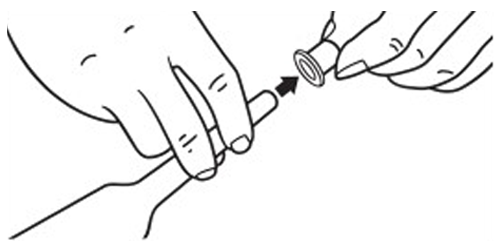
2. Insert the tip of the vial completely into the rectum (in children less than 15 kg, insert only halfway). Hold the vial with the tip facing down.
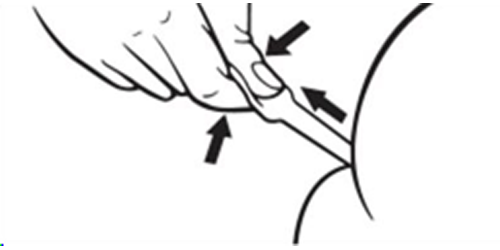
Use the entire contents of the vial by squeezing firmly with your thumb and forefinger to empty the solution completely.
3. To prevent reabsorption, keep the vial in a compressed position until it is removed from the rectum. Then briefly squeeze the patient's glutes (thighs).
A small amount of solution is expected to remain in the vial after administration, and this is normal.
Side effects
Adverse effects observed in clinical studies and reported after use are detailed below. The frequency of these side effects is classified as follows: Very often (≥ 1/10); Common (≥1/100 – < 1/10); Rarely (≥ 1/1000 – < 1/100); Very rare (≥ 1/10,000 – < 1/1000) Or very rare (< 1/10,000) or frequency unknown.
Elderly and debilitated patients in particular may be more sensitive to these side effects and may require lower doses.
Blood and lymphatic system disorders
Rare: blood disorders, including thrombocytopenia
Mental disorders
Common: decreased alertness, blunted emotions, confusion, anterograde amnesia, paradoxical reactions
Susceptible patients may develop undiagnosed depression.
Nervous system disorders
Often: sedation, drowsiness, headache, dizziness (especially in the elderly with a risk of falling), ataxia, speech disorder, tremor, fatigue, "addictive effect".
Rare: dry mouth.
Eye disorders.
Frequent: double vision.
Rare: other visual disturbances.
Cardiovascular disorders
Rare: bradycardia, chest pain, hypotension.
Respiratory, thoracic and mediastinal disorders
Rare: laryngeal spasm, respiratory depression.
Digestive system disorders
Rare: nausea, vomiting, epigastric pain, constipation, diarrhea.
Liver and biliary tract disorders
Rare: cholestatic jaundice, hepatocellular jaundice.
Unknown: elevation of liver enzymes, jaundice.
Skin and subcutaneous tissue disorders
Very rare: allergic skin reactions, including angioedema.
Musculoskeletal and connective tissue disorders
Frequent: myasthenia.
Urinary and renal system disorders
Rare: urinary retention.
Not known: urinary incontinence.
Disorders of the reproductive system and mammary glands
Rare: changes in libido, menstrual disorders.
Not known: gynecomastia (enlargement of the breast in men).
General disorders and administration site conditions
Often: increased appetite.
Overdose
Symptoms
Overdose is usually observed with varying degrees of depression of the central nervous system, ranging from drowsiness in mild cases to coma in severe cases.
In mild cases, symptoms include drowsiness, mental confusion, and asthenia (generalized weakness). In more severe cases, symptoms include ataxia (impaired movement coordination), hypotonus (decreased muscle tone), hypotension (low blood pressure), respiratory depression, rarely coma, and very rarely death.
Treatment
In cases of overdose, the possibility of taking several drugs together should also be taken into account. If the overdose occurred orally, if the patient is awake (within 1 hour), vomiting should be induced. If the patient is unconscious, gastric lavage should be performed, making sure that the airway is protected. If gastric emptying is not helpful, activated charcoal should be given to reduce drug absorption.
Treatment is symptomatic. Respiration, pulse, blood pressure, and body temperature should be monitored, and measures should be taken to support cardiovascular and respiratory function. Flumazenil is used to reverse the depressant effect of benzodiazepines on the central nervous system.
Release form
2.5 ml in a low-density polyethylene vial. 5 vials are packed in a cardboard box with a leaflet.
Storage conditions
Store at a temperature below 25°C, protected from light and moisture and out of the reach of children.
Shelf life
2 years.
Do not use after the expiration date.
Condition of release from pharmacy
It is released on the basis of a prescription.
Manufacturer
VEM Pharmaceutical San. and Tic. Inc., Turkey.
Cherkezköy Organized Industrial Zone, Karaağaç District, Fatih Bulvari
No. 38 Kapakli, Tekirdag, Turkey.
Holder of registration card
VEM Pharmaceutical San. and Tic. Inc., Turkey.
Maslak District AOS 55. Street 42 Maslak Block A Sit.
No. 2/134, Sarıyer, Istanbul, Turkey.